
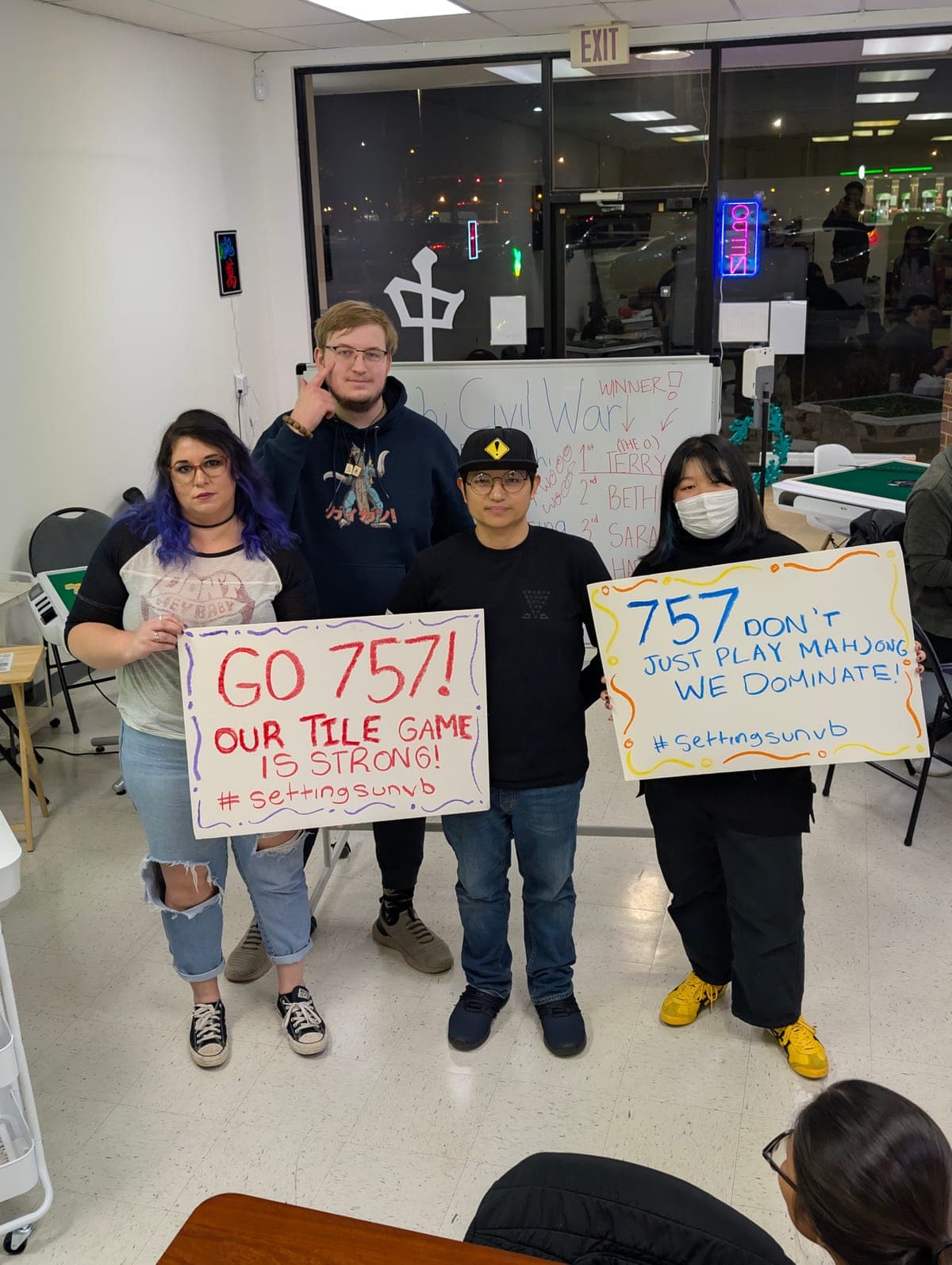
Let's be clear about one thing right away.
We do not encourage spilling actual tea on the mahjong table. The tiles are automatic. The machines are beautiful. And nobody wants to explain to the group why the shuffler smells like green tea for the next three weeks.
But spilling the tea as in talking, laughing, venting, bonding, telling stories, roasting each other after a bad discard? That is practically the whole point.
Riichi mahjong is a serious game. It rewards discipline, strategy, and focus. But it also puts four people around a table together for hours at a time — and humans, being humans, are going to talk.
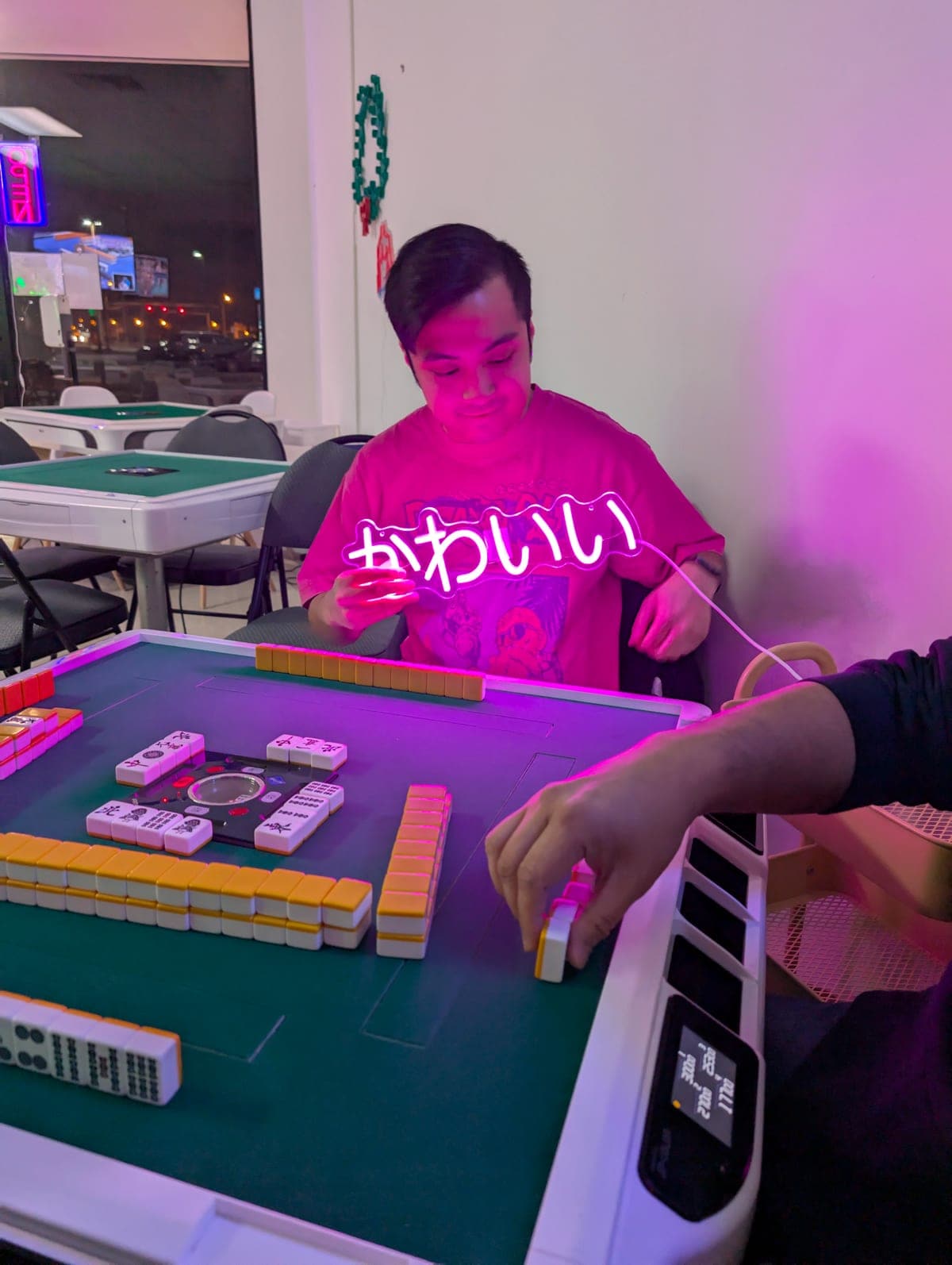
The Table Has a Social Life You Didn't Expect
If you have never played mahjong with a regular group, you might assume it is mostly quiet concentration. Heads down, tiles clicking, everyone in their own head.
And yes, there are moments of intense focus. When someone is one tile away from a win, you can feel it in the air. Everyone is reading the board and guarding their discards like state secrets.
But between those moments? The table is alive.
Someone recaps the last hand with a level of dramatic detail that belongs in a documentary. Someone else is still processing the ron call from three rounds ago. Two players are debating whether the café down the street is actually good or just aesthetically pleasing. And someone — always someone — has a story that starts with "okay this is completely unrelated but..."
This is not a distraction from the game. This is the game. The social layer is baked in.

Why Mahjong Builds Real Community
Not every game night format creates the same kind of connection.
Some games are great for laughs but too loud or fast for real conversation. Some are so cutthroat that the table energy turns sharp. And some just do not keep people at the table long enough for anything to develop.
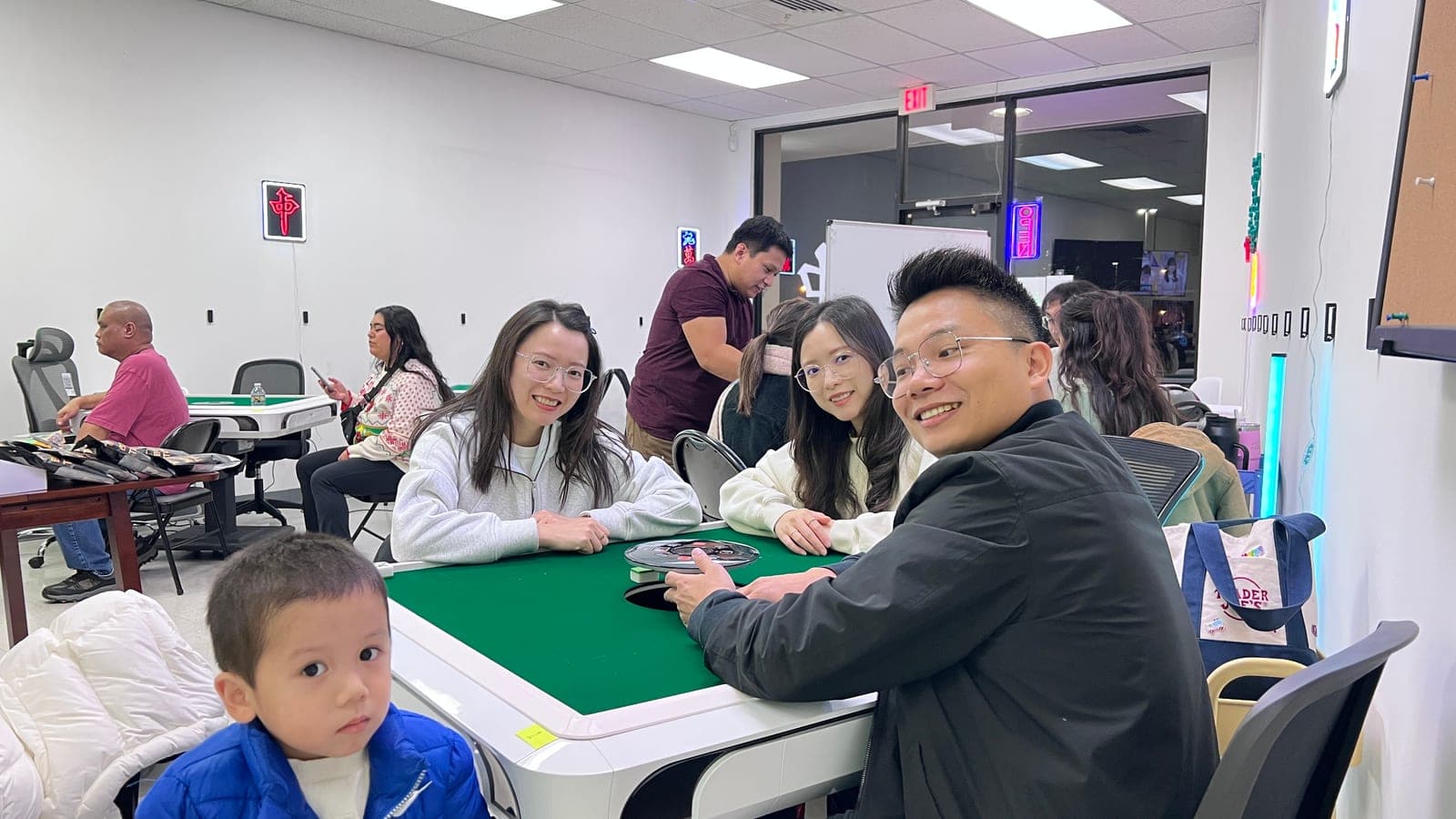
Riichi mahjong has a different rhythm. Each round takes time. You're seated. You're present. You're watching the same board, making choices together, and experiencing the same swings of fortune. That shared context gives people something to talk about, and the pace gives them room to actually talk.
Over time, you start to notice something: the people you play mahjong with regularly become the people you actually know. Not just "I've seen that person at game night" know — but genuinely know. Their sense of humor. How they react when things go sideways. What they care about. Whether they are the type to tenpai in silence or announce it like they just won a championship.
That is not a small thing. That is community.
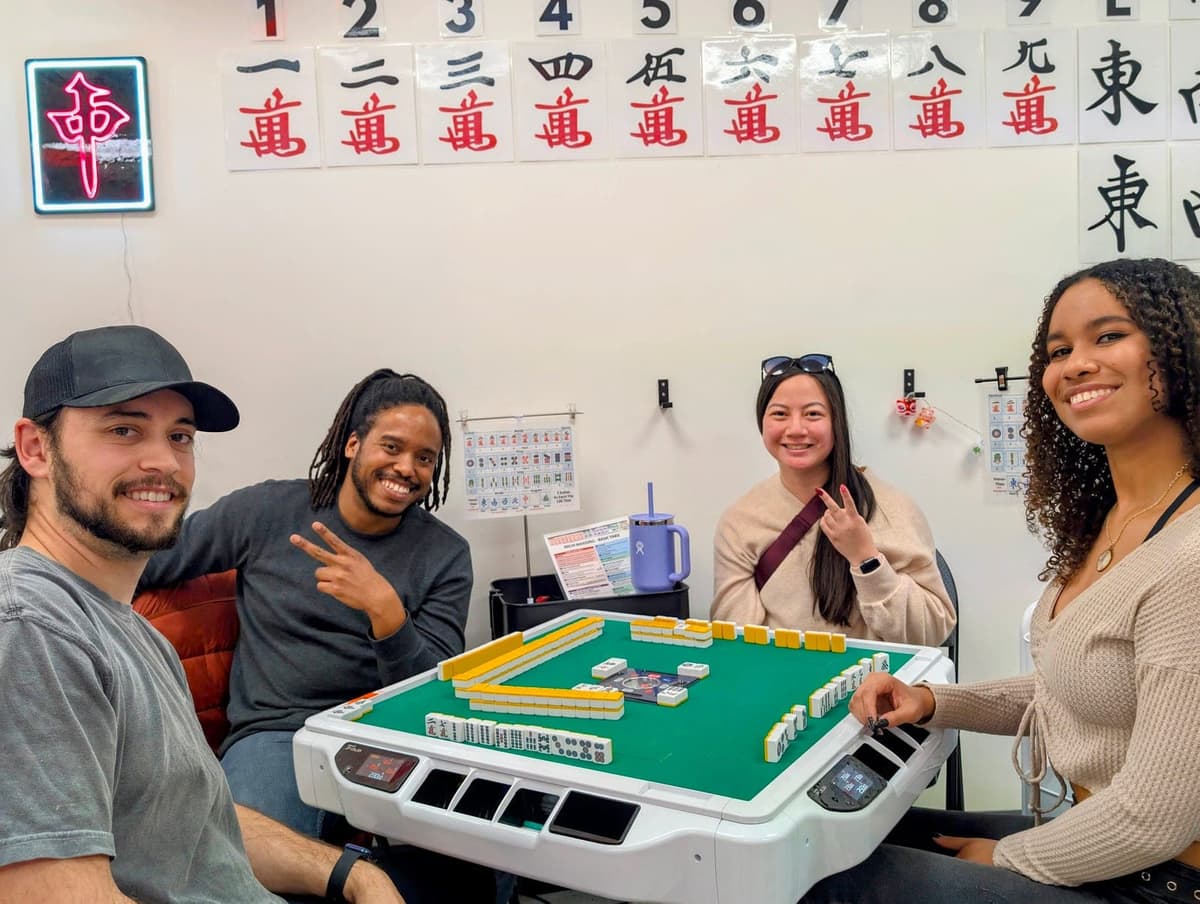
The Mahjong Table Is a Judgment-Free Zone (Mostly)
Okay, if you deal into someone's riichi with the exact tile they needed, you will hear about it.
That is fair. That is part of the game. The good-natured grief is part of what makes it fun.
But outside of that? The Setting Sun Virginia Beach mahjong table is one of the more welcoming environments you will find in the Hampton Roads area. Beginners are not treated like burdens. New players are shown the ropes. Questions are answered. People who are learning get real time at the table, not just a rulebook and a wish of good luck.
The reason is simple: everyone who plays regularly was a beginner once. The table teaches that pretty fast.
And once you stop worrying about looking clueless, you relax — and the social side of the game becomes a lot more fun.
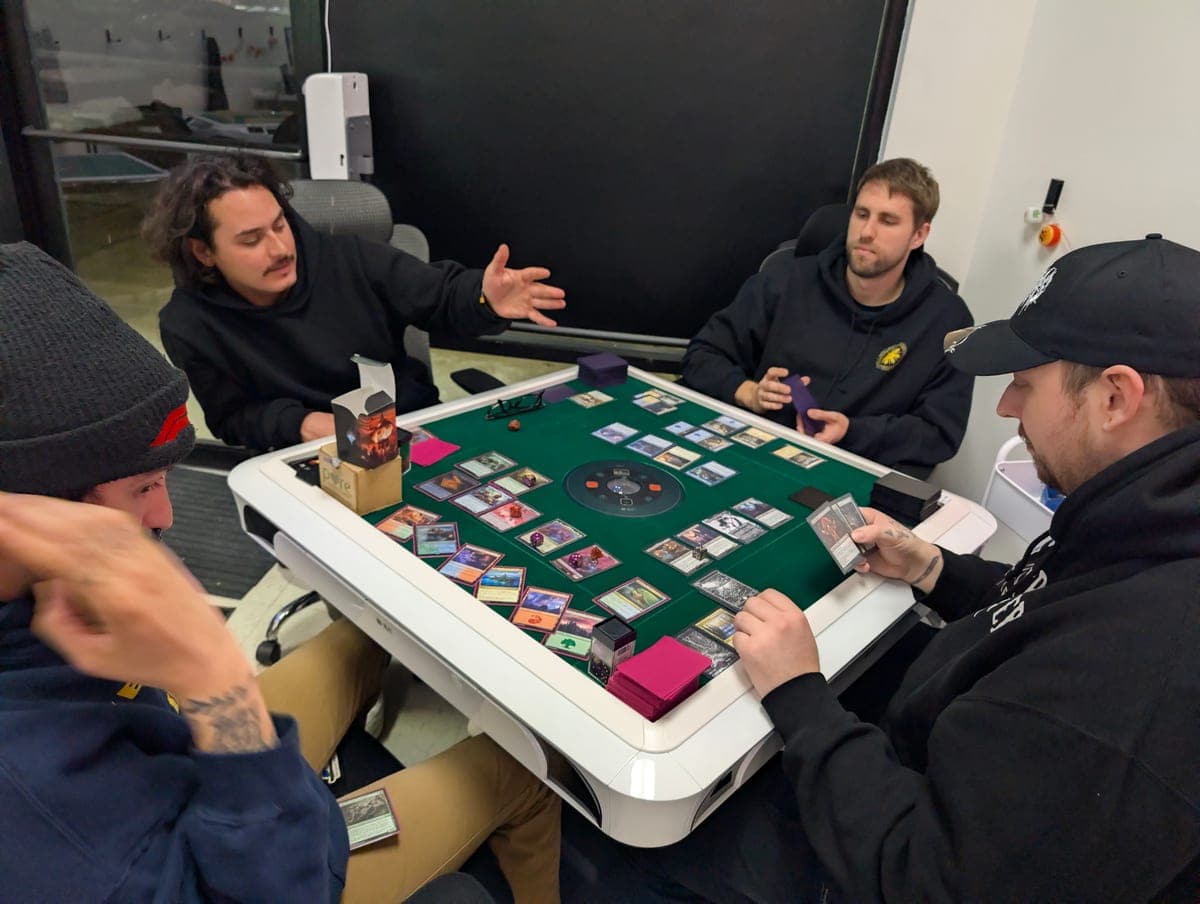
The Conversations That Only Happen at a Mahjong Table
You have not truly bonded with someone until you've both survived a dealer streak that lasted half the round and laughed about it afterward.
There are entire categories of conversation that only exist in a mahjong context:
- The post-mortem: deep analysis of a hand that ended badly, treated with the seriousness of a board meeting
- The humble brag: "I wasn't even going for that hand, I was just defending" (everyone knows this is a lie)
- The tile sympathy: a full minute of group mourning when someone draws the one tile that would have completed their hand, right after someone else wins
- The callback: bringing up a discard from six rounds ago as evidence of character
- The unsolicited advice: offered freely, received with varying levels of grace
These things happen at every table. They are universal. And they are, objectively, delightful.

Good Tea Pairs Well With Mahjong (Metaphorically Speaking)
The social richness of mahjong is part of why the game has lasted centuries and spread across cultures. People keep coming back not just because the game is deep — though it is — but because the experience of sitting around the table together is genuinely good.
At Setting Sun Virginia Beach, the mahjong nights are designed to support exactly that. The space is comfortable. The tables are built for extended sessions. And the player base is the kind of mix that makes for a real community rather than a rotating cast of strangers.
If you have been looking for a reason to show up beyond just wanting to learn the rules, this is it.
The rules are learnable. The Mahjong Lessons will take care of that. But the community — the conversations, the inside jokes, the group that forms over shared rounds and shared losses — that develops on its own once you start showing up.
How to Become a Regular at the Table
Becoming a regular is simpler than it sounds.
You show up. You play. You come back. After a few sessions, faces become familiar, the table starts to feel like yours, and you realize you have been looking forward to this specific Thursday in a way that says more about the people than the game.
Here is how to start:
- Beginners: Check out the Mahjong Lessons page for lesson options, then show up to a workshop night to meet the group
- Casual players: Join a workshop or open play session from the Events Schedule and see how the table feels
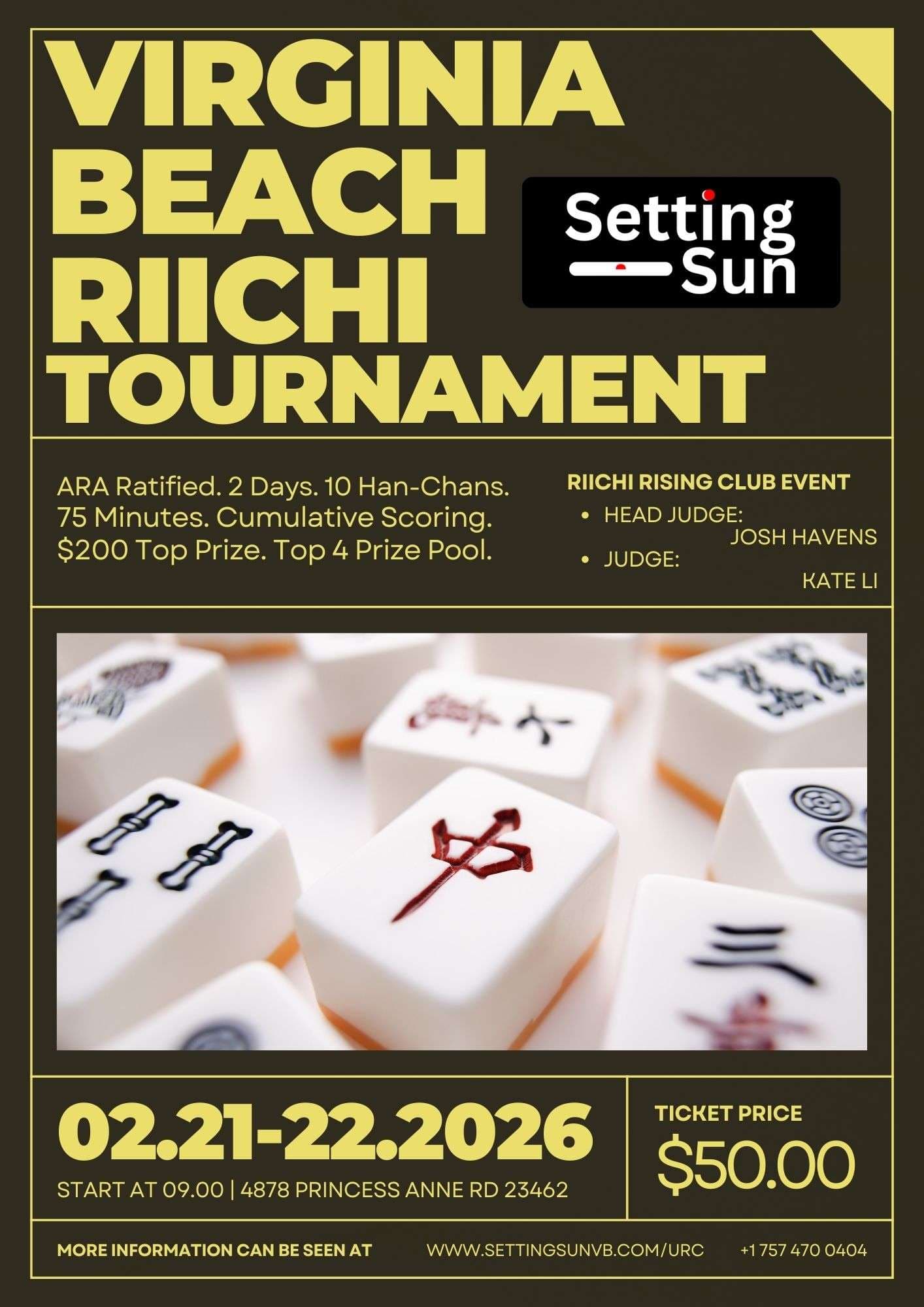
- Competitive players: Look at the Riichi Mahjong Tournament and upcoming events to find the next bracket
- Everyone: Contact us if you have questions — we'll help you find the right night
The Setting Sun Virginia Beach community covers all of Hampton Roads. Players come from Virginia Beach, Norfolk, Chesapeake, Newport News, and beyond. The table is open.
All you have to do is sit down.
FAQ: The Social Side of Mahjong in Virginia Beach
Is mahjong beginner-friendly at Setting Sun?
Yes. Beginners are welcome at workshops and open play sessions. You do not need to know the rules before you arrive — just show up ready to learn and the table will take care of the rest.
Can I come to a mahjong night by myself?
Absolutely. Most regulars started as solo visitors and found their group through the table. It is one of the fastest ways to meet people in the Virginia Beach gaming community.
Is it mostly serious or casual?
Both, depending on the night. Workshop nights lean more social and learning-focused. Tournament nights have competitive energy. Most regular sessions are somewhere in the middle — genuine play with room for conversation and fun.
What should I bring to my first mahjong night at Setting Sun?
Just yourself. The tables, tiles, and setup are all provided. If you're nervous, book a lesson first to build confidence before your first group session.
Where is Setting Sun located?
Setting Sun Virginia Beach is at 4878 Princess Anne Rd, Suite 105, Virginia Beach, VA 23462 — convenient for players from across Hampton Roads including Norfolk, Chesapeake, and Newport News.
The Table Is Waiting
The mahjong community in Virginia Beach is here, and it is friendlier than you think.
Come for the tiles. Stay for the conversation. Leave with people you actually want to play again next week.
That is what the table does. And no tea was spilled in the making of this community — on the table, anyway.
Check the Events Schedule, browse upcoming events, or drop us a message on the Contact page. We'll see you at the table.